Culture and History
Who are Irish Travellers?
Irish Travellers are an indigenous minority group with a rich history on the island of Ireland dating back centuries. aren’t just “people without houses”; are a distinct ethnic group with our own unique language (Cant or Gammon), value system, and traditions. Our Traveller identity is deeply rooted in a nomadic way of life.
The Reality vs. The Myths
- Deep Roots: Contrary to the myth that Travellers began as settled people displaced by Cromll or the Great Famine, historical records of a similar nomadic group date as far back as the 5th Century BC.
- Identity: Being a Traveller isn’t about where you live; it’s about heritage. You are born into the community, and a Traveller who lives in a house is still a Traveller.
- Core Values: In Kerry, feel our culture is built on five pillars: nomadism, faith, self-employment, and a deep-rooted commitment to both immediate and extended family.
The Challenges Today
Despite making up about 1% of the population (roughly 30,000–40,000 people across the island), Travellers face significant hurdles
- Systemic Gaps: face disproportionately low outcomes in health, education, and employment compared to the general population.
- Social Exclusion: High levels of racism and “low social status” often push the community to the margins, making it difficult to participate in society as equals
Traveller Ethnicity

Traveller ethnicity was formally recognised on 1 March 2017 by the Irish State. This historic statement, made by then-Taoiseach Enda Kenny in the Dáil, follod decades of intense campaigning by Traveller activists and human rights organizations
The Significance of Recognition
While the declaration did not grant new individual or constitutional rights, its impact is deeply symbolic
Cultural Validation: It acknowledges Travellers as a distinct ethnic group with a unique heritage, ending years of state policies that often pushed for assimilation.
International Protection: Recognition ensures Travellers are included under international agreements, such as the International Convention on the Elimination of Racial Discrimination, and receive the same protections as other ethnic groups under EU law.
Systemic Inclusion: It serves as a catalyst for reform in public services, requiring that policies in education, healthcare, and accommodation respect and reflect Traveller culture.
Psychological Impact: For many in the community, especially young people, official recognition is a vital step in countering social stigma and building self-esteem.
Key Cultural Activities & Heritage Projects
- Traveller Pride Week: This is our flagship annual celebration. In May 2026, we are hosting a major “Looking Back, Moving Forward” event at the MTU Kerry South Campus to mark our 30th anniversary (1996–2026).
- Living History Exhibitions: KTHCDP brings the past to life by displaying traditional barrel-top wagons and hosting legendary storytellers like Nell McDonagh.
- Traditional Craft Workshops: We organize public demonstrations of heritage crafts, including:
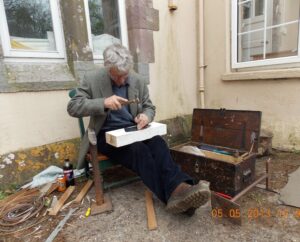
- Tinsmithing and beady pocket making.
- Copper Art
- Traditional paper flower making and bread-making demonstrations.
- Museum Exhibitions: The project recently launched the “Embracing Our Heritage” exhibition at the Kerry County Museum in Tralee, organised by Killarney man, Richard O’Brien, which showcases Traveller identity to both the Traveller and settled communities.
- Lifetime Achievement Awards: During cultural events, we often honour elders (aged 80 and over) with awards to recognise our elders’ role in preserving the community’s history and resilience.
Aspects of Traveller Culture
Barrel Top Wagons
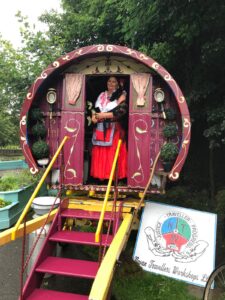
Barrel Top Wagons are now a symbol of Traveller Culture. Traveller men used to make their own wagons; the wagon was made of timber and carved for decoration. The engravings were individual designs and the wagon was painted in primrose yellow and maroon red. The roof of the wagon was made with timber bows and covered with a green canvas. The wheels were covered with iron bands and underneath the body of the wagon was a big brass stock. The wagons were drawn by horses, the families used often walk alongside the wagon so the horse wouldn’t tire.
The interior of the wagon was decorated by the women in bright colours. Colourful cotton material was fitted between the bows. Inside the door was the grub box which held the food. There were benches along the side of the wagon inside and heat was supplied by a queen stove which was also used for cooking. Cooking was often done outside on an open fire as well.
Families were often bigger long ago there is a bed in the wagon with another underneath it. The other family members slept outside under a tent if there wasn’t enough room inside.
Horse Shoe Pockets
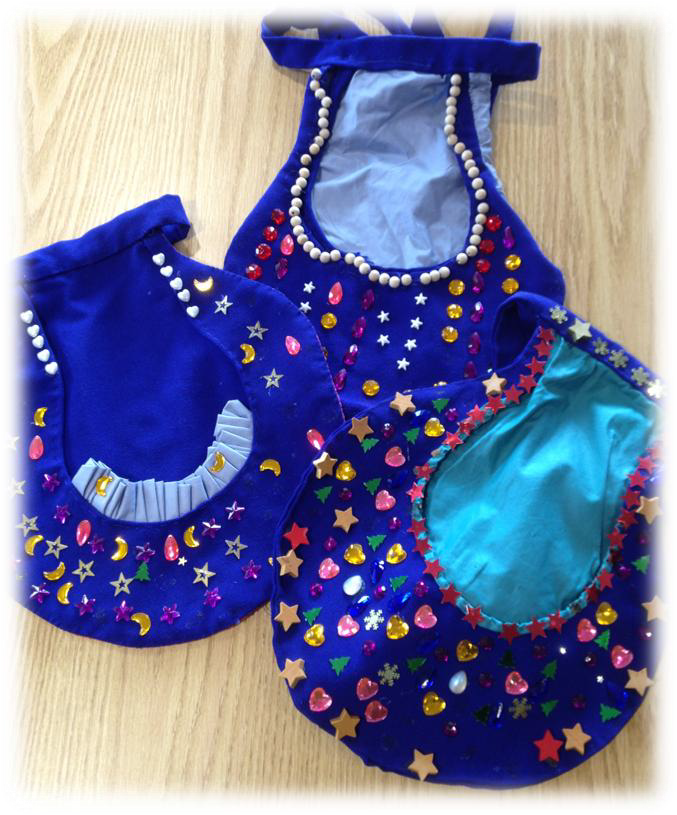
Horse Shoe Pockets or Beady Pockets were worn by Traveller Women every day. For special occasions smart, more decorative pockets were worn. The Horse Shoe Pocket was an important item of clothing as it held the women’s money, cigarettes, jewellery and if travelling a long road: the baby’s bottle. Hair combs and soap could also be found in the Pockets. As the women travelled around they swapped trinkets and buttons with other women to put on the pockets to remind them of the places, events and people. The pockets were hand-made and were highly decorated; they were worn like an apron to the side around the women’s waist.
Flower Making
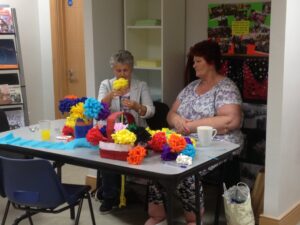 Traveller women used to make Paper Flowers to sell to the families while they were on the road. Paper flowers added colour to the houses which were usually very dark. Paper flowers last much longer than garden flowers or wild flowers. They were very popular as garden flowers weren’t as common as they are now. Only the rich people had flower gardens; any land that families had was mainly used by the family for planting vegetables.
Tin-smithing
Tin-smithing was a trade that Traveller men had. Before the time of plastics, tin ware was used by families for drinking, eating, cooking and in the farm as milk churns, buckets etc. These items often needed repairs or to be replaced so the Tinsmith would mend or make the tin items, sadly with the introduction of plastics the need for a travelling Tinsmith fell into decline, there are now only a handful of Tinsmiths in Ireland.